
Blog Case study
A new lawn and gravel driveway rarely get planned together, but on this Knutsford project they were — and the shared starting point, for a lawn and gravel driveway installed side by side, was the ground rather than the finish.
Expert Lawn Installation and Driveway Process
The project began with a comprehensive assessment of the site: soil condition, drainage, and how each area would actually be used, since a lawn built for a family with young children needs a different specification underneath it than a decorative strip nobody walks on, and a gravel driveway needs a fundamentally different base than either.
Premium Materials for Lasting Impressions
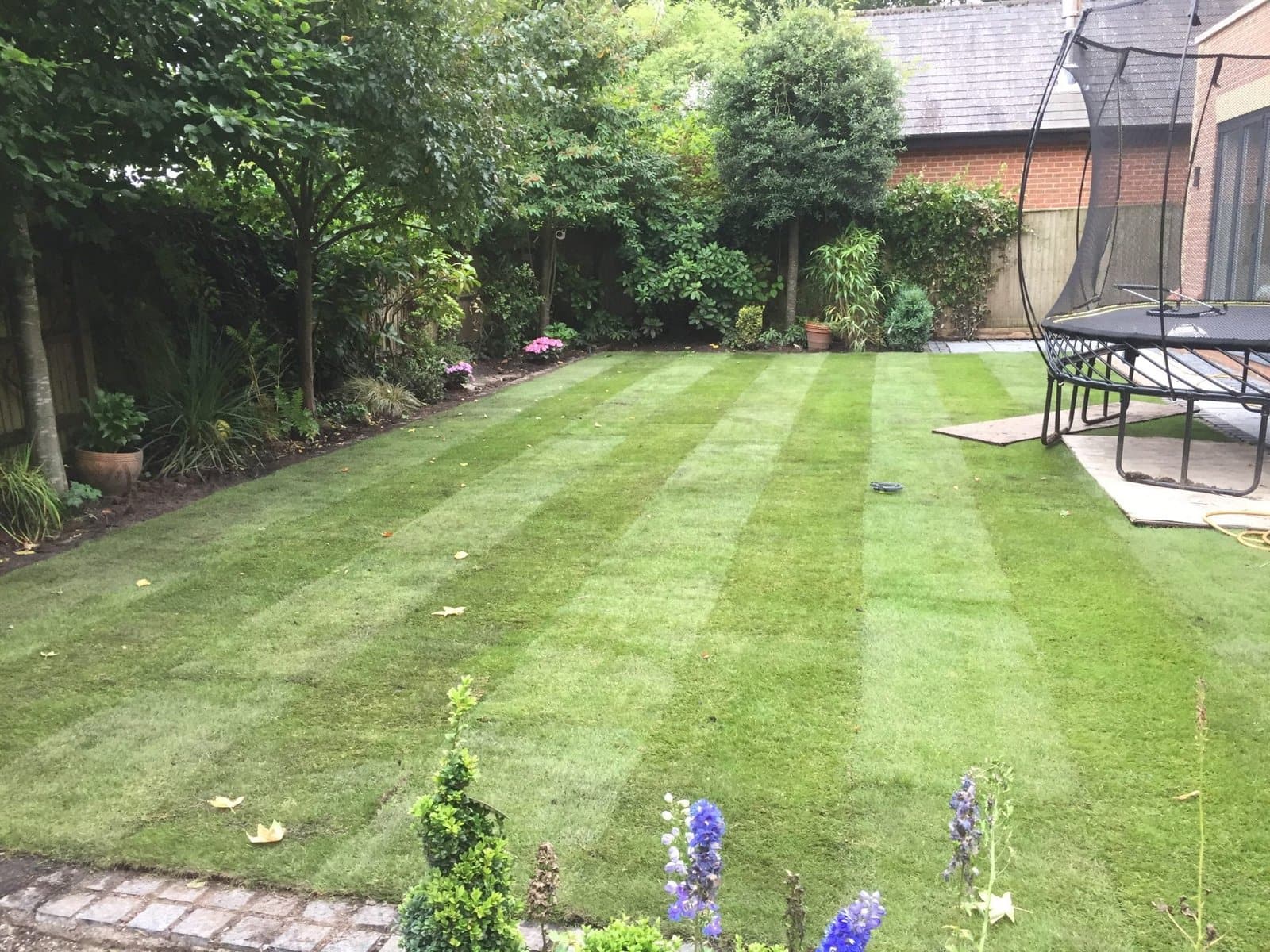
For the lawn, that meant premium-grade turf laid on properly prepared, decompacted topsoil rather than rolled straight onto whatever ground was already there — the single biggest reason new lawns fail within a year on Cheshire clay is skipping this step to save a day’s labour. For the driveway, it meant a compacted sub-base — typically 100-150mm of MOT Type 1, depending on ground conditions — with a weed-suppressing membrane beneath the gravel, and edge restraints to stop the stone migrating onto the lawn or the road within its first winter.
Choosing a Local Expert in Knutsford
Both elements of a project like this benefit from being handled by one team rather than two separate contractors. A lawn and a driveway installed by different trades on different timelines often end up fighting each other at the boundary between them — levels that don’t quite match, drainage that sends water from one surface onto the other. Managing both as a single project means the levels, the drainage and the finished edge between lawn and gravel are designed together from the start.
Why the Two Surfaces Need Different Groundwork
It’s tempting to assume a lawn and a driveway share the same preparation, since both start with clearing and levelling the same plot. In practice, the two need almost opposite treatment underneath. Turf needs decompacted, aerated topsoil that roots can actually establish into — the opposite of a firm, load-bearing surface. A gravel driveway needs exactly that firm, load-bearing base, compacted in layers so it doesn’t rut or shift under a car’s weight, with the topsoil stripped away entirely rather than worked with. Treating both areas the same during groundwork — as happens on jobs rushed through by a single crew without lawn-specific and driveway-specific preparation — is one of the more common reasons a new lawn struggles to establish next to a driveway that itself settles unevenly within a year or two.
Getting the boundary between the two right matters just as much: an edge restraint that stops gravel migrating onto the grass, and a slight fall on the driveway side so surface water sheds away from the lawn rather than saturating the turf along that edge every time it rains.
The Result
The finished project gives this Knutsford home a driveway that drains properly and won’t need topping up with fresh gravel every year, and a lawn established on ground that was actually prepared for it rather than just seeded and hoped for. It’s a good example of how much of a “new lawn” or “new driveway” job is actually about what happens before the visible material goes down.
Planning a New Lawn or Driveway?
Whether you need one of these or both together, we handle the ground preparation as carefully as the finish — see our lawns and artificial grass and driveway installation pages for the full detail on materials and process. Get in touch if you’re in Knutsford or nearby and ready for a free quote.